Case study
Reliquary
A top-down, 3D adventure about science, magic, and the preserved ruins of a vanished empire.
The project
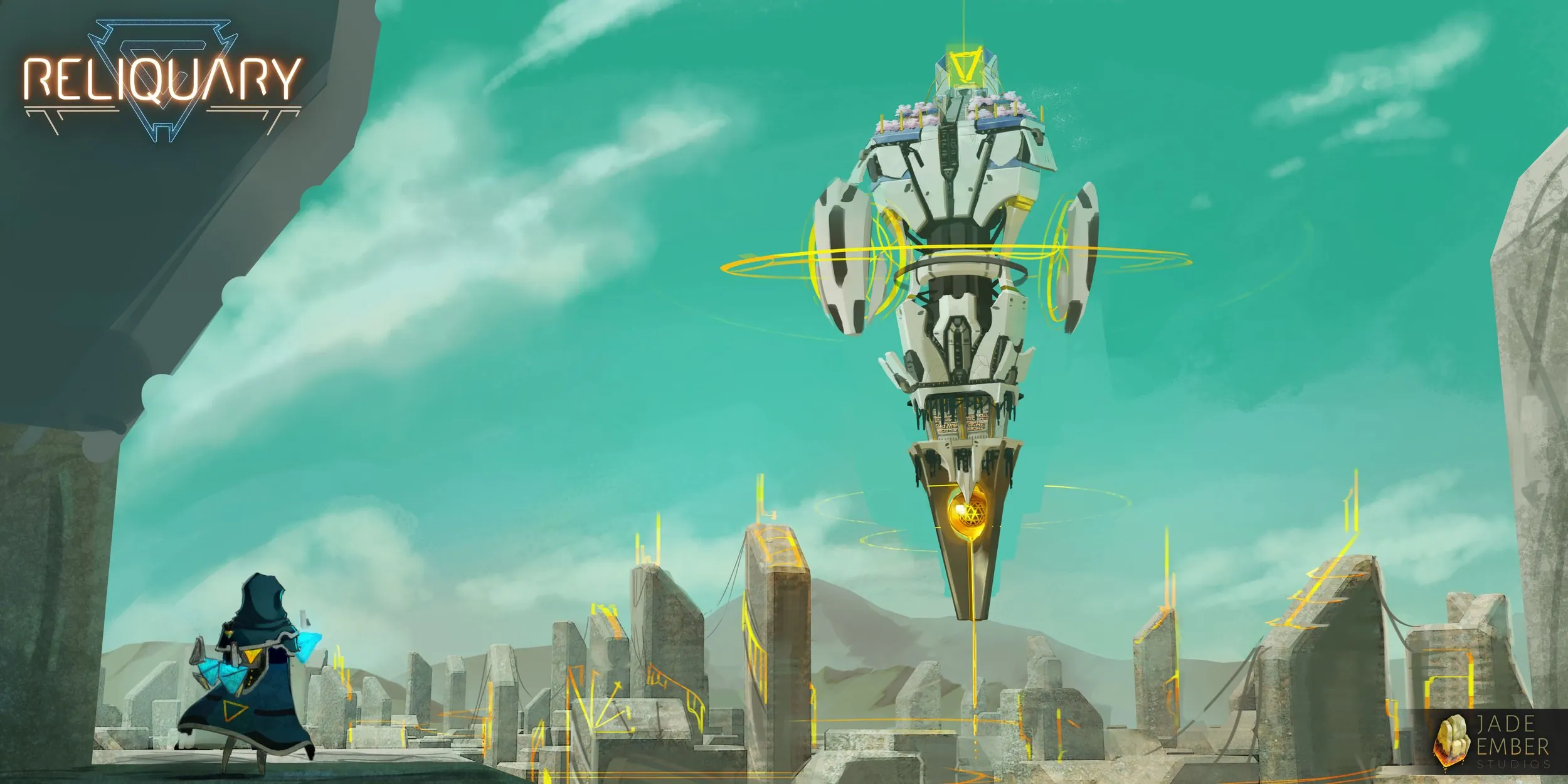
Reliquary was a new take on the metroidvania genre—a top-down, 3D adventure set in a world where science and magic share the same material language.
I served as the technical and creative game director from 2019 through 2023, leading the project's code, systems, visual direction, and production pipeline.
Systems, not features
A metroidvania needs a wide variety of unique enemies, but building every behavior by hand is expensive for a small team. I established a code framework that systematized enemy AI through increasing levels of specificity.
That gave content creators a stable foundation for making dramatically different enemies with only a few lines of configuration.
All parts of a system
The same systems-first approach extended into art. I set the creature art direction and pipeline, then created key examples from concept through implementation so the team could produce varied enemies without making art the production bottleneck.
Story matters
Fully voiced cutscenes were a critical goal from the beginning. To make that practical, I created an auto-parser driven by a custom markup language.
Writers could work in script files while the tool converted them into cutscenes, keeping subtitles accurate, voice lines synchronized, and animation iteration fast.
Concepts first: setting a mood
Every environment started with concept art that established mood, story, technical constraints, and a unified visual language.
Bringing it to life
A robust pipeline brought those concepts into the game. The environment work had to support visual refinement while remaining practical for a small team and a performance-constrained 3D world.
Hyper-modularity
The world was assembled from hyper-modular part kits, reducing performance requirements and allowing level designers to build spaces without depending on the art team for every update.
The project was delayed after the industry-wide cuts and recession of 2023, but remains in development and is actively seeking future distribution.
Related work
Jade Ember Studios
An independent studio collective making games, stories, and accessible tools for creators and adventurers.